
Storytime
Why Storytime Matters

The hidden cost of skipping bedtime stories
It’s 7:45pm. The dishes aren’t done, the school bag hasn’t been packed for tomorrow, and there are approximately three hundred emails waiting patiently in your inbox, judging you. The kids are (sort of) in bed, and the idea of sitting down to read another story about a dragon who can’t find his socks feels like one more thing on a list that never seems to get any shorter. So you give them a quick kiss, flick off the light, and tell yourself you’ll do it tomorrow.
And tomorrow, the same thing happens.
This isn’t a piece designed to make you feel guilty, because parenting is already a masterclass in feeling like you’re doing everything wrong simultaneously. This is actually an invitation to look at bedtime stories differently. Not as another chore to tick off, but as something quietly extraordinary happening in the simplest of moments. Because those 15 to 20 minutes, unremarkable as they might feel, are doing something no app, no educational toy, and no carefully structured learning programme can quite replicate.
The Invisible Investment You Might Be Making (Or Missing)
Think about the things you genuinely invest in for your child’s future, the swimming lessons, the carefully chosen school, the vitamins they spit out every morning with impressive consistency. These feel like proper investments because they’re tangible, scheduled, and cost actual money. Bedtime stories, by contrast, feel almost too simple to be significant. A book, a lamp, a child leaning against your shoulder. It doesn’t look like much from the outside.
But developmental research has long pointed to early shared reading as one of the most powerful predictors of later literacy and academic achievement. Children who are read to regularly during their early years arrive at school with richer vocabularies, stronger comprehension skills, and a fundamentally different relationship with language. The gap that can open up between children who’ve had consistent story time and those who haven’t isn’t small, and it can take years to close, if it closes at all.
What makes this particularly worth sitting with is that you don’t need to be a teacher, a reading specialist, or even especially confident with books yourself. You just need to show up, open the pages, and read. The investment is almost laughably accessible, which makes the habit of skipping it all the more worth examining honestly.
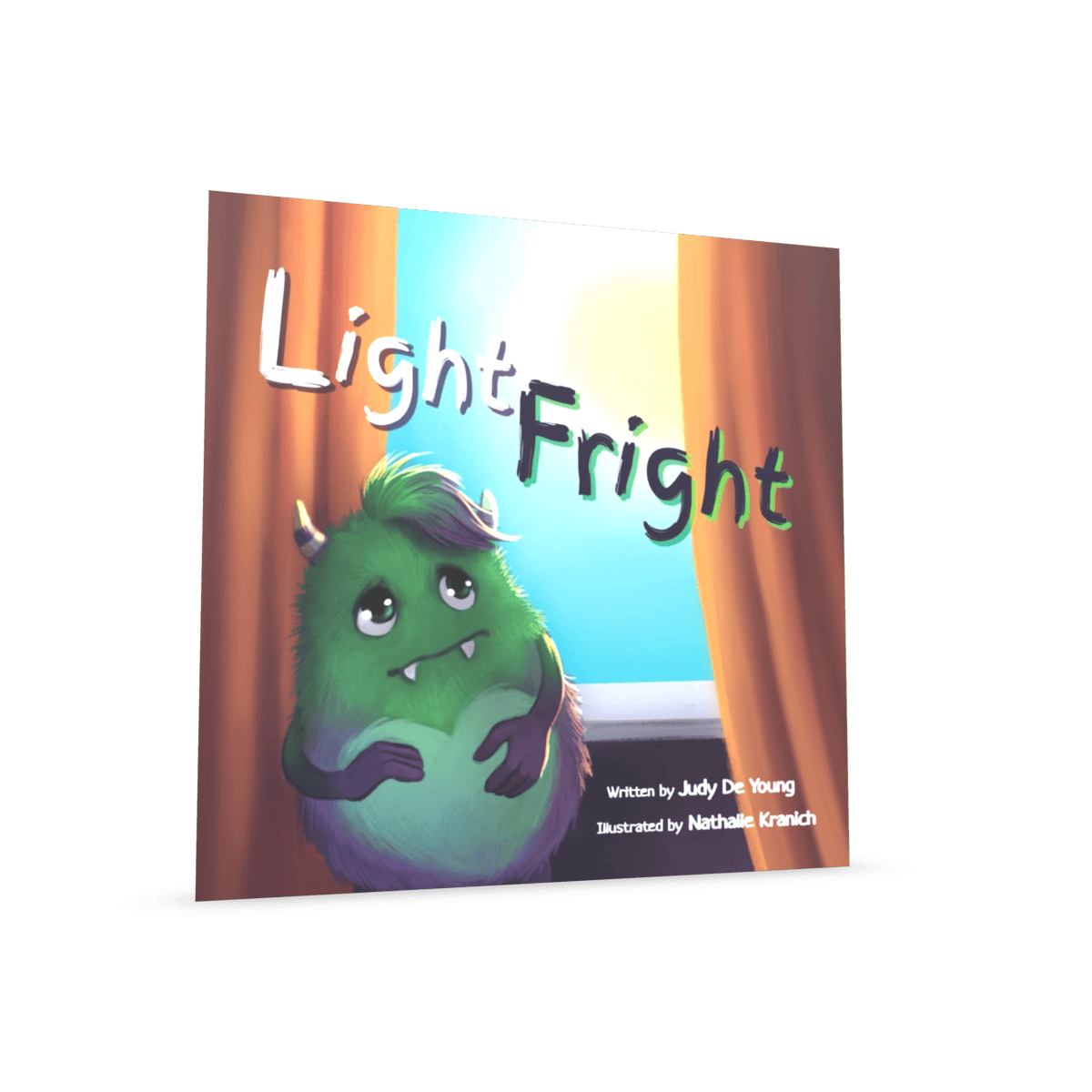
Light Fright
I had so much fun with Light Fright. It’s a joy from the first page to the last. The story is both clever and funny, packed with rich language that sneaks in a bit of learning while your kiddo is too busy laughing to notice. It’s not a magic spell for banishing bedtime fears, but it’s definitely worth a shot! Plus, there are loads of free activities and resources online if you want to keep the monster fun going after the last page. If you’re looking for a new favourite bedtime book about monsters, giggles, and facing the dark, Light Fright is absolutely worth adding to your shelf.
Learn moreWhat’s Actually Happening During Story Time
Language Is Being Built, Word by Word
When you read aloud to your child, you’re giving them access to a kind of language they almost never encounter in ordinary conversation. Spoken everyday language, “put that down,” “have you seen my keys,” “eat your peas”, tends to be functional and fairly simple. But books, even children’s books, are full of vocabulary that stretches a child’s understanding in ways that casual chat simply doesn’t. Words like “bewildered,” “magnificent,” or “lurking in the shadows” don’t typically come up over breakfast, but they live comfortably in the pages of a good picture book.
This vocabulary exposure matters enormously. A child who enters school with a wide-ranging vocabulary doesn’t just find reading easier, they find thinking easier. Language and thought are deeply intertwined, and the more words a child has at their disposal, the richer their inner world becomes. Every story you read is quietly stocking that internal library.
Beyond vocabulary, shared reading builds phonological awareness, the ability to hear and play with the sounds in words. When you read rhyming stories and your child starts to anticipate the next rhyme, giggling before you’ve even said it, they’re doing something cognitively impressive. They’re learning how language is structured, how sounds connect, and how words work. This is the foundation that formal reading instruction builds upon, and story time lays it down naturally, joyfully, without anyone needing to sit at a desk.
The Attachment Happening in the Margins
There’s something about the physical and emotional intimacy of bedtime stories that’s worth paying proper attention to. A child curled up against you, warm and safe, while your voice fills the room with something imaginative and absorbing, this is a moment of genuine connection that’s harder to manufacture than it looks. You’re not just reading. You’re saying, without words, “you have my undivided attention, and right now, nothing is more important than you.”

In a world where screens compete for everyone’s attention and the pace of daily life tends to fragment family time into small, distracted pieces, this is genuinely rare. Bedtime story time creates what you might call a natural pause , a structured moment where the busyness stops and presence becomes the whole point. Children feel this, even if they couldn’t articulate it. The security and warmth that comes from this kind of consistent, unhurried attention contributes to the kind of emotional regulation and confidence that serves them well far beyond childhood.

The connection isn’t just good for your child, either. Picture this: you’ve had a relentlessly demanding day, and you sit down with a book and your child leans into you. There’s something restorative about that simplicity. Parents who build bedtime reading into their routine often describe it as one of the parts of the day they end up genuinely looking forward to, a chance to step outside the noise and just be with their child in an uncomplicated way.
The Night Box
Nominated for the CILIP Kate Greenaway Medal and shortlisted for a stack of other awards, The Night Box is a magical bedtime read that’s got everyone talking. Written by Louise Greig, who’s clearly got a way with words, and brought to life with Ashling Lindsay’s dreamy illustrations, this book is all about Max, a small boy with a very important job. Max holds the key to night-time itself, with a special box of midnight blue. One turn of his key and – WHOOSH! – day tiptoes out while night swirls in, filling every corner with gentle darkness.
Learn more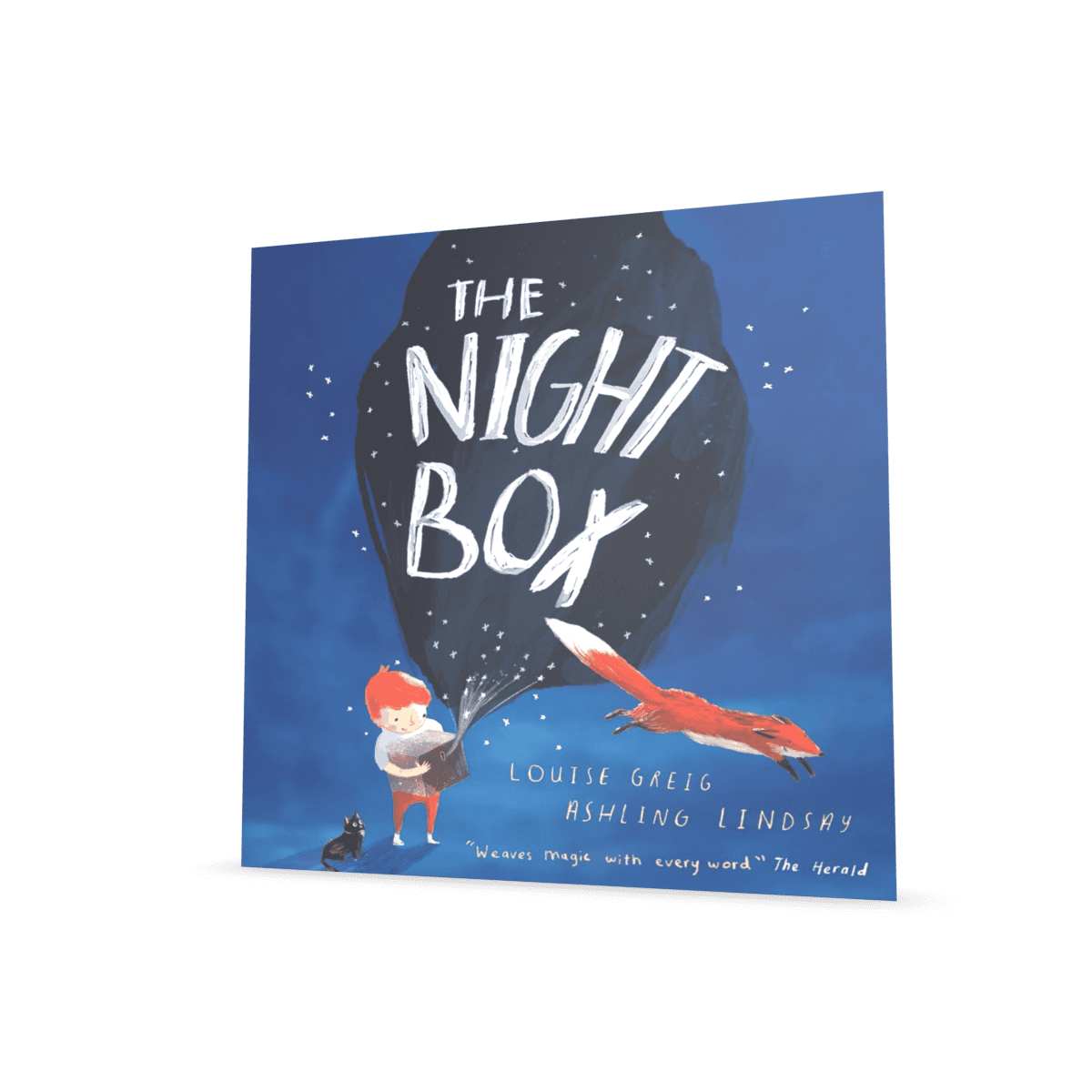
Sleep, Security, and the Settling Power of a Story
Bedtime is genuinely tricky territory for many families. Children’s bodies may be tired, but their minds are still humming, still processing, still looking for reasons to call you back into the room one more time (“Mum, I’ve just remembered I need to ask you something very important” at 8:47pm is a universal parenting experience). The transition from the activity of the day to the stillness of sleep isn’t automatic, it needs a bridge.
A consistent bedtime story routine provides exactly that. The ritual itself, the same sequence of events each evening, signals to a child’s nervous system that it’s time to wind down. There’s a predictability to it that children find deeply comforting, particularly younger children who are still learning that the world follows reliable patterns. When bedtime comes with a story, it comes with something to look forward to rather than something to resist.
Stories also give children a gentle way to process the emotional residue of the day. A character who feels left out, or nervous about something new, or overwhelmed by big feelings, these narrative experiences give children a framework for their own emotions without anyone having to sit them down for a serious conversation. Good children’s books do this work quietly and brilliantly, and they do it most effectively when a trusted adult is there to share the moment and respond to whatever the story stirs up.
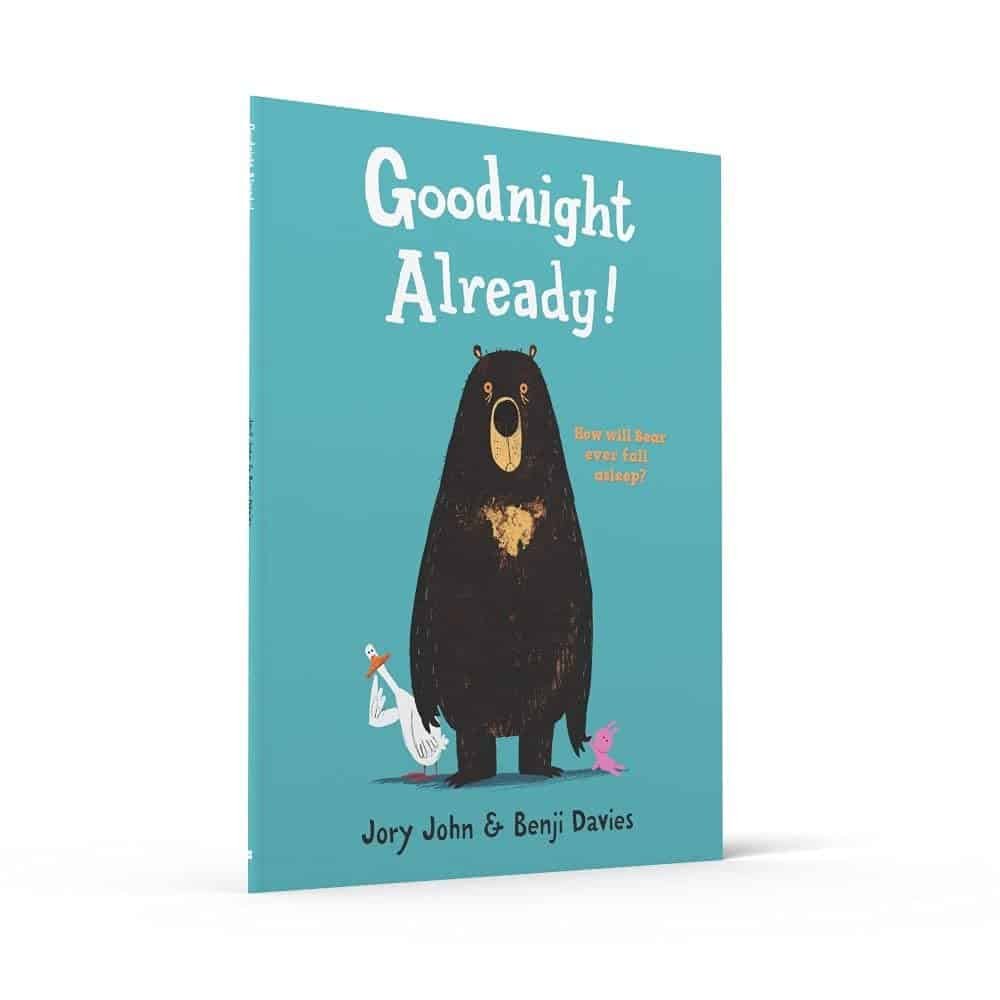
Goodnight Already!
I can’t begin to tell you how much I love this book!
If bedtime at your house involves any level of chaos, you’ll definitely get a kick out of this one. Meet Bear, he’s absolutely shattered and just wants to catch some z’s. Enter Duck, Bear’s super chatty next-door neighbour, who’s way too excited to let Bear snooze in peace. Duck has endless energy and a million ideas for hanging out… unfortunately for Bear, all of them happen right at bedtime.
Learn moreThe Imagination Question Nobody Talks About Enough
Imagination is treated as a soft skill, lovely to have, not exactly on the national curriculum. But the ability to think creatively, to hold a story in your mind and move around inside it, to wonder what happens next and why characters make the choices they do, these are cognitive capacities that matter across every area of life. Problem-solving, empathy, creativity, critical thinking: all of these draw on the same mental muscles that storytelling exercises.
Imagine what happens inside a child’s mind when you read them a story. They’re building a world from words alone. They’re picturing faces, landscapes, weather, emotion. They’re following cause and effect, holding narrative threads, anticipating and revising their predictions. This is sophisticated cognitive work dressed up in the delightfully simple costume of a bedtime story about a bear who wants to stay awake at Christmas.
Screen-based entertainment, for all its genuine pleasures, tends to do this work for children. The images are provided, the pacing is set, the imagination largely isn’t required. Books put the child in the creative driving seat in a way that nothing else quite does, and bedtime, with its quietness and its natural orientation toward the interior world, is the perfect time to develop that capacity.
Starting (or Restarting) the Routine
If regular bedtime stories have fallen away in your household, whether through busyness, a child who declared themselves “too old,” or simply the gradual drift of modern family life, the good news is that it’s genuinely easy to begin again. The bar for entry is beautifully low.
Start with what your child loves. Not what you think they should love, or what won a literary prize, but what makes them lean in, ask questions, and beg for “just one more page.” A child who’s gripped by a story about football, or dragons, or a ridiculous family of talking vegetables, is a child whose love of reading is quietly being nurtured. The quality of the engagement matters far more than the prestige of the text.
Keep the routine consistent rather than ambitious. Even four or five nights a week creates enough regularity for a child to feel the rhythm and look forward to it. Five minutes on a genuinely exhausted night is infinitely better than nothing, and you’ll often find that once you’re in it, the weariness lifts a little and five minutes becomes fifteen without anyone noticing.
For older children who insist they’ve outgrown being read to (often around the same time they insist they’ve outgrown everything, briefly, before circling back), try reading together, each of you with your own book, in companionable silence. Or find a chapter book complex enough to be genuinely interesting to both of you and read it aloud together. The shared world of a story is still the shared world of a story, regardless of who’s holding the book.
And if you find yourself rediscovering books you loved as a child, the ones that made you cry unexpectedly, or laugh properly, or think about something for days after, consider that a bonus entirely for you. Some of the best children’s literature is brilliant full stop, and reading it again through your child’s eyes has a particular kind of magic that’s worth making space for.

The Moments You Can’t Get Back — and the Ones You Still Can
Children grow with a speed that is genuinely alarming when you’re in the middle of it. The window for bedtime stories, for a child who wants to be read to, who will sit still for it, who finds your voice the most soothing sound in their world, is not permanent. It passes, the way everything passes, and you don’t always know which story was the last one until some time has gone by and the asking has simply stopped.
This isn’t meant to land as pressure. It’s meant as a gentle reminder that some of the most significant things we do as parents don’t announce themselves. They happen quietly, in the small domestic rituals of ordinary evenings, in the warmth of a lamp and a shared book and a child who smells of bath time and possibility.
The cost of skipping bedtime stories isn’t dramatic. It doesn’t show up in a single missed night, or even a dozen. It accumulates slowly, in the vocabulary not yet built, the connection not quite made, the imagination not quite stretched, the trust not fully deepened. And the benefit of returning to it is equally quiet, a gradual enriching of something that matters more than it looks like it does.
So tonight, if you can, find the book. Settle in. Let the emails wait.
The dragon who can’t find his socks will thank you for it.

Disclaimer:
This blog contains affiliate links to books I genuinely love and believe you will enjoy too. If you click through and make a purchase, I may earn a small commission, at no extra cost to you.
Your support helps keep Snoop Hog well supplied with jars of mustard (his favourite!). Thank you!